
Little Secrets Inside Longvictor New Electrical’s Energy Storage Cabinets
In the previous articles, we talked a lot about production, after‑sales service, and the people involved. But there is one topic we haven’t explored in depth: design.
Many people think that an energy storage cabinet is just a metal box with batteries inside and a screen on the outside—nothing much to talk about in terms of design. In fact, that’s not true. Whether an energy storage cabinet is good to use often depends less on how good the cells inside are, and more on those subtle design details that you don’t see.
These details may go completely unnoticed when the customer receives the product. But if they are not done well, the customer will feel that something is “off,” “troublesome,” or “hard to use” every day. So in this article, we want to walk you through these “unassuming but thoughtfully considered” design features, one by one.
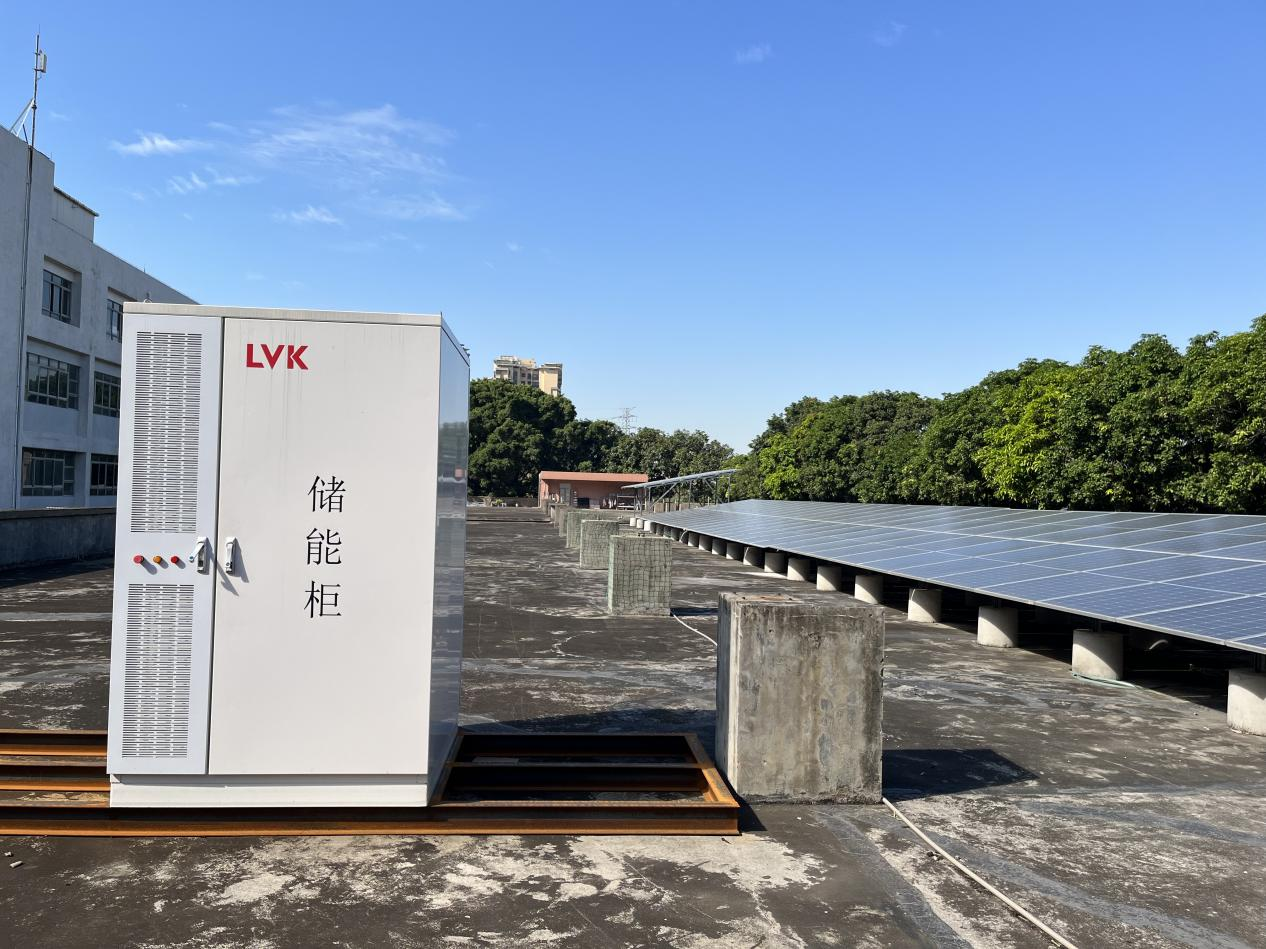
The first detail: that extra handle.
When you open our energy storage cabinet, you’ll notice a small handle on the side of the battery module. This handle isn’t a must‑have. Many manufacturers don’t include it; their modules are just bare batteries.
Why did we add this handle? Because our after‑sales engineer, Lao Zhou, made a suggestion.
He noticed that when he guided customers remotely to replace a module, they would struggle to lift the battery with their bare hands. A battery module weighs over ten kilograms and has no good gripping point, so customers would have to reach in with both hands and pry it out—it was risky and inconvenient. Adding a handle costs very little, but when a customer needs to replace a module, they can lift it out with one hand, much more safely.
The initial design for this handle was plastic. However, after testing, we found that plastic couldn’t handle the load and would break over time. We switched to metal, which cost a bit more but gave us peace of mind.
Customers will never actively praise this detail. But if one day they need to replace a module and can easily lift it out using that handle, they’ll think to themselves, “This design is really thoughtful.” That’s exactly what we aim for.
The second detail: that tilted panel
There is a display screen on the front of our energy storage cabinet, showing information such as battery level, power, and status. We revised the position and angle of this screen three times.
The first version was flat, flush with the cabinet door. Later we found that when users stood to look at the screen, their viewing angle was looking down, and the text on the screen appeared somewhat reflective.
For the second version, we recessed the screen slightly and added an anti‑glare coating. The result was better, but still not ideal.
For the third version, we tilted the screen upward at about a fifteen‑degree angle. Now when users stand and look at the screen, it faces them directly—no need to bend down or tilt their head; they can see all the data clearly at a glance.
This change added a lot of complexity to production. The cabinet door required a separate mold, and an extra step was needed during installation. But in the end, we decided to go ahead with it. Because an energy storage cabinet is looked at every day—if we made users bend down each time, that would add up to over three hundred times a year. We didn’t want to put that burden on our users.
The third detail: the junction box hidden at the bottom.
There are typically two ways to handle wiring for an energy storage cabinet: one is placing the wiring port on the side, and the other is placing it on the back. Side wiring is convenient, but the cables are exposed and look less tidy. Back wiring is aesthetically pleasing, but the cabinet has to be moved away during installation, which is quite inconvenient.
In the end, we chose a compromise: the wiring box is located at the bottom of the cabinet, near the floor. This way, during installation, the cables come up from the floor and are completely hidden once connected, and the cabinet can be placed flush against the wall without any issue. Additionally, the bottom wiring box has a removable cover that opens up to a spacious interior, making it easy to reach in and operate without needing to flip the entire cabinet over.
This design was finalized after repeated discussions between our structural engineer and the installation technicians. One installer said, “The location of this wiring box is the most convenient I’ve ever worked with.” Hearing that made us very happy, because it meant future customers would find it convenient as well.
The fourth detail: The “breathing” cooling hole
When an energy storage cabinet operates, it generates heat and needs to be cooled. Where to place the cooling vents and how large to make them is a matter of careful consideration.
If the vents are too large, cooling is effective, but dust and insects can easily get in. If they are too small, dust protection is good, but cooling suffers, affecting battery life.
We deliberated over this issue for a long time. The final design features cooling vents on both sides of the cabinet in a louvered shape with the openings facing downward. This allows hot air to rise and exit from the top, while cool air enters from the bottom of the sides, creating natural convection. With the louver openings facing downward, dust and insects have difficulty getting in, and rainwater will not enter during rainy weather.
We tested this design using a wind tunnel and also conducted a three‑month field test outdoors. The final cooling efficiency was thirty percent higher than that of the first version.
The fifth detail: The door lock that can be operated with one hand
The door lock on an energy storage cabinet may seem like a small thing, but it is used every day. For a residential energy storage cabinet, the user might look at the screen once a day—that means unlocking it once a day.
We surveyed various door locks on energy storage cabinets available in the market and noticed a common issue: many locks require two hands to operate—one hand holding the door, the other turning the key. If the user is holding a phone or a cup, they have to put down what they’re holding just to open the door.
So we designed a lock that can be operated with one hand. Insert the key, give it a gentle turn, and the door pops open slightly; then, with a finger, you can swing it open. The entire process takes just one hand, leaving the other free to hold something or steady yourself against a wall.
We tested seven or eight different spring tensions for this lock before settling on the right one. Too tight, and the door wouldn’t pop open; too loose, and the door would swing on its own. The final tension we chose was determined after our own employees simulated opening and closing the door hundreds of times in the hallway.
The sixth detail: The detachable dust cover
Earlier, we mentioned the cooling vents. Although they were designed with dust protection in mind, over long‑term use, some dust still accumulates. Too much dust can affect cooling efficiency.
So we added a removable dust filter to the cooling vents. Every six months, users can open the cabinet door, pull out the dust filter, rinse it with water, let it dry, and slide it back in—all in about a minute. No tools are needed, no professional assistance is required; users can do it themselves.
This design was proposed by our after‑sales team. They noticed that many customer issues were not caused by product failure, but by clogged cooling vents leading to high temperatures that triggered battery protection. Rather than having customers call in to complain, we thought it would be better to give them an easy way to solve the problem themselves.
The seventh detail: The line slot with a margin allowance
Inside the energy storage cabinet, there are many wiring harnesses that need to be routed through cable ducts. In the industry, the typical approach to cable duct width is “just enough to be sufficient”—as long as it can hold all the wires.
But our cable ducts are designed with thirty percent more space than “sufficient.” Why? Because customers sometimes add extra components themselves, such as additional sensors or communication modules, which require wiring. If the cable ducts are packed tightly, customers have no room to run additional cables.
Adding thirty percent extra space means widening the cable ducts, reconfiguring the internal layout of the cabinet, and increasing costs to some extent. But we believe it’s worth it, because someday in the future, a customer might need that extra space. We don’t want customers to be frustrated by “nowhere to run the cables.”
Final Note
These details, when looked at individually, each seem very small. The handle, the screen angle, the wiring box location, the vent orientation, the door lock, the dust filter, the cable duct width… None of these are mentioned in brochures, listed in specification sheets, or asked about by customers when placing an order.
But together, they form what makes Longvictor New Electrical’s energy storage cabinets “a pleasure to use.” When customers receive them, they may not be able to pinpoint exactly what feels good, but they’ll find them “convenient,” “worry‑free,” and “trouble‑free.” That is exactly the effect we strive for.
A great product is not built on a single groundbreaking innovation, but on a hundred subtle details stacked together. Behind every detail, someone has put in thought, conducted tests, debated solutions, and started over from scratch. These people may not appear in brochures, but their dedication ultimately shows up in every moment when a customer opens the lock, looks at the screen, replaces a module, or cleans the dust filter.
If you ever receive an energy storage cabinet from Longvictor New Electrical, take a closer look at these small touches. You’ll discover that inside this metal box lies the thoughtfulness of many people.