
My vineyard has finally started to use electricity generated by itself.
In previous articles, we wrote about the German baker, the Polish farmer, and the Spanish olive oil mill owner. Today, we are telling the story of a fourth customer. He comes from the Burgundy region of France, is the owner of a winery, and his name is Leclerc.
Mr. Leclerc’s concern is different from all the previous ones. He is not trying to save on electricity bills, nor is he worried about power outages, nor is he aiming to change his production schedule. His goal is: to run his winery on electricity generated by himself, achieving energy independence.
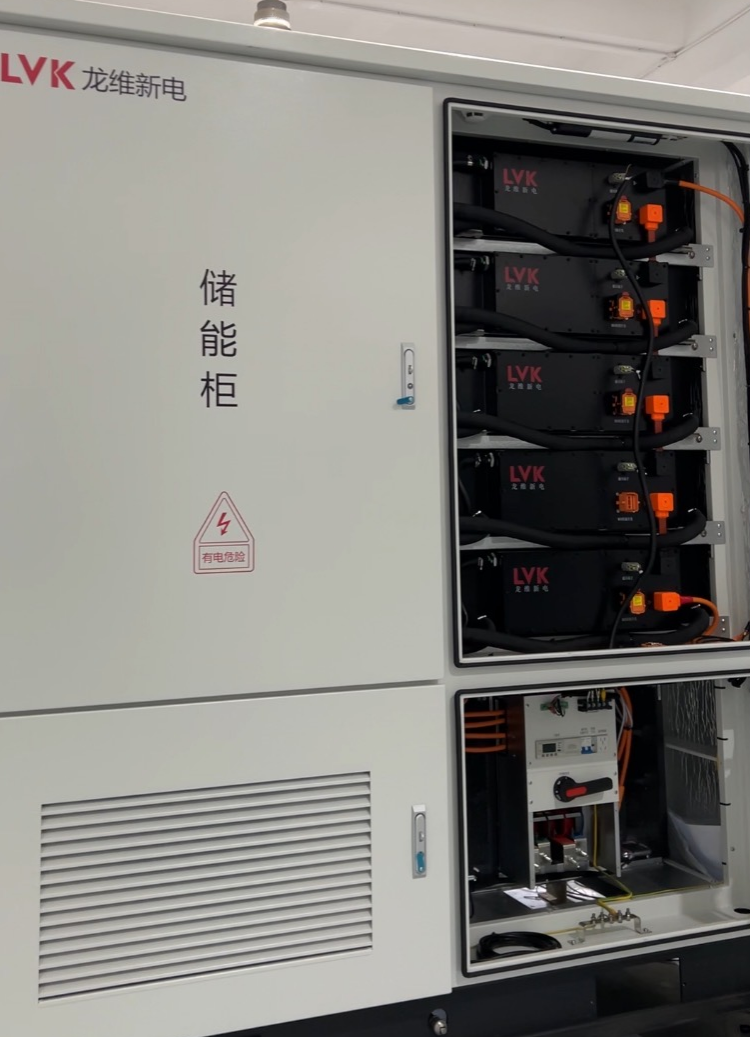
The Energy Dream of a Winery
Mr. Leclerc’s family has been making wine in Burgundy for four generations. His winery is not large, producing only a few tens of thousands of bottles a year, but the quality is excellent and it has a good local reputation.
As the heir of a winemaking family, Mr. Leclerc has a special commitment to “tradition” and “nature.” His vineyard is organically farmed, using no chemical fertilizers or pesticides. His cellar is a century‑old building that maintains constant temperature and humidity naturally. He has always hoped that the winery’s energy could also come from nature—the sun.
A few years ago, he installed a set of solar panels on the winery roof, with a total capacity of about twenty kilowatts. He initially believed that with the solar panels, the winery could become self‑sufficient in electricity. However, after actual operation, he discovered a problem: the peak generation of solar power is at noon, while the winery’s peak electricity usage is in the morning and evening—lights and equipment need to be turned on in the morning, and the cellar’s temperature control system runs at night. The solar power generated during the day went unused, fed back to the grid for nothing; at night, when electricity was needed, the panels produced nothing.
He needed a way to store the excess power generated during the day for use at night. So he began researching energy storage cabinets.
Why did he choose Longwei Xin Dian?
Mr. Leclerc is a very meticulous person. He spent a full three months researching almost every major energy storage brand on the European market. He compiled their specifications, prices, certifications, and customer reviews into a large spreadsheet, comparing each item one by one.
In the end, he chose Longvictor New Electrical. He later told us there were three reasons for his decision.
First, our product had passed local French certifications and could be legally connected to the grid. He said that while some brands’ storage cabinets were cheaper, they lacked French certification, meaning the grid company would not approve the installation, making them useless. Our product had complete CE certification and all the necessary compliance documents for France, so he could install it with confidence.
Second, our product supported off‑grid operation. This meant that if the grid lost power, the storage cabinet could automatically switch to off‑grid mode and continue supplying electricity to the winery. Mr. Leclerc felt this feature was important, because the Burgundy region occasionally experienced winter storms that caused power outages, and he did not want the cellar’s temperature control to be affected.
Third, he had read our “Transparent Factory” series of articles. He said he especially liked the article about the German baker, Mr. Müller, because he found the story very authentic. He commented: “A manufacturer willing to write about its customers’ stories is likely to be reliable.”
A minor incident during the installation process
After the energy storage cabinet arrived in France, Mr. Leclerc hired a local professional solar installer to carry out the installation. The installation itself was not complicated, but there was a small incident.
The winery’s electrical room was an old stone building with very thick walls and no pre‑drilled cable holes. The installer needed to drill a hole through the wall to route the cable from the solar inverter to the storage cabinet. However, the stone wall was extremely hard, and two drill bits broke before they finally got through.
Mr. Leclerc stood by, feeling pained for his old wall. The installer joked, “Sir, this wall is harder than your wine.” Mr. Leclerc laughed and said, “That’s good—it means my cellar is sturdy enough.”
Once the hole was drilled, the rest of the installation went smoothly. The storage cabinet was fixed in a corner of the electrical room, taking up little space and not being obtrusive. Mr. Leclerc looked at it and said, “It looks like it has always been here.”
The changes after three months of use
Three months after the energy storage cabinet had been running, Mr. Leclerc sent us a very long email. In the email, he described in detail the changes at his winery.
The first change: his electricity bill dropped to almost zero. Previously, even with solar panels, he still had to pay the grid company over a hundred euros each month, because at night and on cloudy days he had to buy electricity from the grid. After installing the storage cabinet, the solar power generated during the day was stored for use at night, and on cloudy days the cabinet also provided backup support. Over those three months, he bought only a very small amount of electricity from the grid, and his electricity bill fell to just over a dozen euros.
The second change: he no longer worried about power outages. Winter storms in Burgundy sometimes knock down power poles and interrupt the supply. Before, every time there was an outage, he had to run to the cellar to check whether the temperature control system was still running. Now, with the storage cabinet, it automatically switches over during an outage, and the cellar equipment never stops. He said: “I can finally sleep peacefully without having to get up in the middle of the night to check the thermometer.”
The third change, and the one he valued most: his winery was finally running on its own self‑generated electricity. The solar power generated by the panels was stored in the cabinet and then supplied to the winery. Every kilowatt‑hour came from the sunlight on his roof. He said: “This makes me feel that my winery has truly achieved self‑sufficiency. The grapes are grown by me, the wine is made by me, and now the electricity is also generated by me.”
The sentence that Mr. Leclerc said
During the follow‑up, we asked Mr. Leclerc what he would say to someone considering buying an energy storage cabinet.
He thought for a moment and said: “Don’t just look at the price—look at the value.”
He explained: “An energy storage cabinet is not an ordinary piece of equipment; it’s a long‑term investment. It will sit in your home or your winery for ten or fifteen years. You need to choose a brand that is reliable, offers good after‑sales support, and is willing to stand by you for the long haul. Longvictor New Electrical has delivered on that.”
He added: “Your ‘Transparent Factory’ series of articles convinced me that you are a serious company. A manufacturer willing to open its factory for people to see will not cut corners on its products.”
Final Note
Mr. Leclerc’s winery now operates like this every day: the sun rises, the solar panels begin generating electricity, part of which is used directly by the winery, and the excess is stored in the energy storage cabinet. After sunset, the cabinet starts discharging to supply the winery’s nighttime needs. If it’s cloudy or winter sunlight is insufficient, the cabinet still has stored power from previous days to last a day or two. Only when there are several consecutive cloudy days does he buy a little electricity from the grid.
Mr. Leclerc says that now, the first thing he does every morning is not to go to the cellar, but to check the screen on the storage cabinet in the electrical room. Seeing that the battery is sufficiently charged, he feels at ease. Then he walks into the vineyard, looks at the vines, and waits for them to slowly ripen.
He says: “Sunlight gives life to the grapes and also provides energy to the winery. I feel this is a perfect cycle.”
This is Longvictor New Electrical in its thirteenth year. Our energy storage cabinet, in a century‑old winery in Burgundy, France, is quietly storing sunlight and then releasing it at night, guarding the wines that are slowly aging in oak barrels.
If you, like Mr. Leclerc, want to use your own self‑generated electricity and achieve energy independence, we welcome you to talk with us. Perhaps we can help you build that “perfect cycle” as well.