
Mr. Müller, a German baker, and his energy storage cabinet
After writing twelve articles about Longvictor New Electrical’s own stories—from the workshop to the vision, from failures to innovations—today we want to change perspective and write about our customers.
Customers are the most important part of Longvictor New Electrical’s story. Without their trust, we would be nothing. So in this article, we want to tell the story of a real customer. To protect privacy, we have withheld his full name and exact address, but every detail in the story is true.
His name is Müller. He runs a traditional bakery in a small town in Bavaria, Germany.
Mr. Muller’s Troubles
Mr. Müller’s bakery has been open for nearly twenty years. He gets up at three o’clock every morning to start baking bread. The ovens are electric, very powerful, and run for hours at a time.
Electricity is not cheap in Germany. Every month when Mr. Müller receives his electricity bill, he sighs. He has calculated that electricity accounts for nearly twenty percent of the bakery’s operating costs. If electricity prices rise again, he will either have to raise his prices or accept lower profits. He wants to do neither.
He has tried many things: switching to more energy‑efficient ovens, adjusting baking schedules, and even considered installing solar panels. But his roof is not large enough for many panels, and solar panels only generate power during the day, while his peak electricity usage is in the early morning.
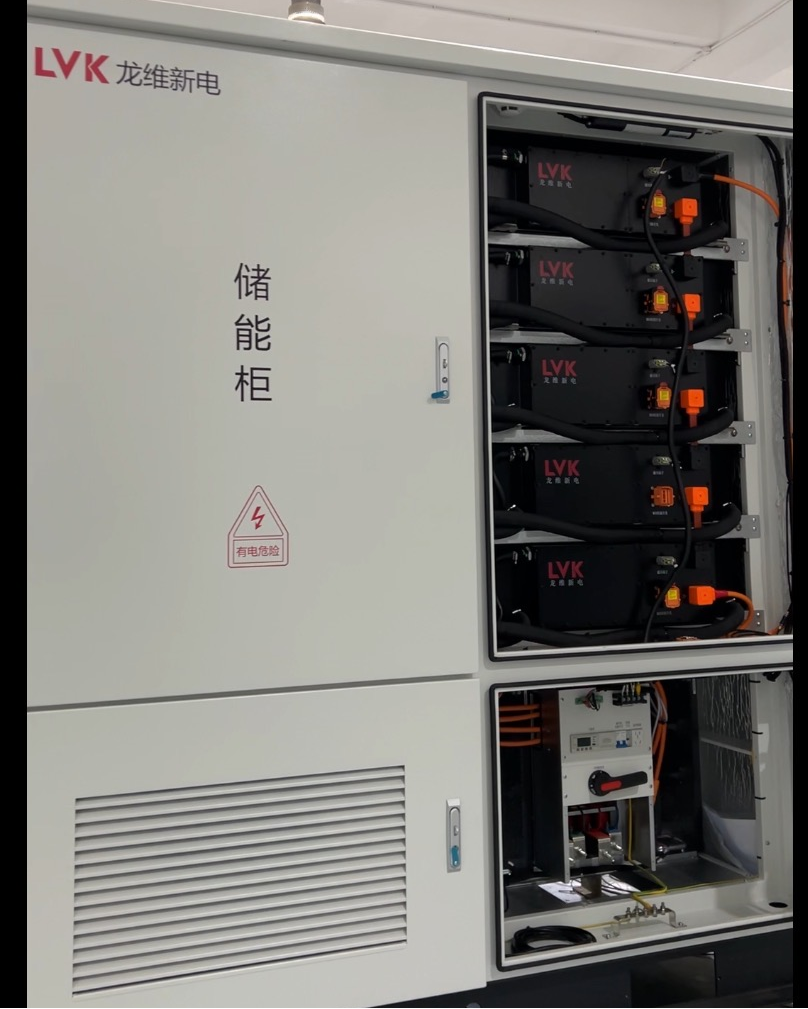
Then he heard about energy storage cabinets—devices that can store electricity and use it when needed. He looked into them and felt hopeful. However, most energy storage cabinets on the market are designed for home use and have relatively small capacity. He needed a commercial energy storage cabinet capable of powering several large ovens simultaneously.
So he reached out to Longvictor New Electrical.
How did we help him solve the problem?
Mr. Müller first contacted us through a form on our website. He wrote a long message describing his situation in detail: the bakery’s electricity usage pattern, the unit price of electricity, the rooftop solar conditions, and his budget range.
After reading his message, our engineers found the project quite interesting. The difficulty was not the energy storage cabinet itself, but how to design a solution that would allow Mr. Müller to reduce his electricity costs as much as possible without significantly increasing his investment.
We spent two weeks putting together a solution. The core concept was “peak shaving and valley filling”: charge the energy storage cabinet during periods when electricity prices are low (typically late at night), and discharge the cabinet to power the ovens during periods when electricity prices are high (in the early morning when baking bread).
Mr. Müller reviewed the solution and raised a few questions: where should the energy storage cabinet be placed? Is it noisy? Is it safe? We answered each question and also sent him a real‑life video of our factory so he could see what the cabinets actually looked like.
A month later, he placed the order.
Minor hiccups during the installation process
The energy storage cabinet took over forty days to ship from Guangdong to Germany. After receiving it, Mr. Müller didn’t rush to install it. Instead, he called us first and said, “I’ve studied the manual, but there are a few things I’m not sure about.”
Our after‑sales engineer, Lao Zhou, scheduled a time with him and provided remote installation guidance via video call. Once connected, Lao Zhou walked him through the process step by step: first, place the cabinet in the planned location, leaving space for ventilation; then connect the solar panels and the grid; finally, configure the parameters to tell the cabinet when to charge and when to discharge.
Mr. Müller did the installation himself, and the entire process took about two hours. He later said it was much simpler than he had expected.
The only minor hiccup was that his home’s electrical box was a bit old, and the wiring terminals were slightly different from our standard ones. Lao Zhou quickly adjusted the wiring plan and asked Mr. Müller to buy an adapter from a hardware store, which solved the problem.
The changes that occurred after three months of use
Three months after the energy storage cabinet was installed, Mr. Müller sent us an email. The subject line read: “Thank you — I’m already seeing the difference.”
In the email, he attached a comparison of his electricity bills. Before installing the energy storage cabinet, his monthly electricity cost was around €620. By the third month after installation, it had dropped to €310 — exactly half.
How did he achieve that? When electricity prices were low late at night, the cabinet automatically charged to full. During the early morning hours when he was baking, the cabinet discharged to power the ovens. During the day, the solar panels first charged the cabinet, and any excess was sold back to the grid. With this combination, his electricity bill was cut in half.
Mr. Müller also mentioned something else in the email: a retired electrician who lives next door to his bakery had been skeptical at first, wondering whether “something made in China” could really be reliable. But after three months, that electrician came over specifically to tell Mr. Müller, “This thing is really good. I want one too.”
Mr. Müller’s feedback to us
Earlier this year, we conducted a follow-up with Mr. Müller. He told us that the energy storage cabinet had been running for nearly a year without any issues. Every morning, the first thing he checks is not the oven, but the cabinet’s display screen, to make sure there’s enough power.
He also said something that left a deep impression on us: “I used to think that saving on electricity was a hassle—you have to calculate everything and change many habits. Now with this cabinet, I don’t have to worry about anything. It just does the smartest thing on its own. I can focus on baking my bread.”
That line later became an internal motto for us: Let customers focus on what they do best—leave the rest to us.
Final Note
Mr. Müller’s story is just one of the many customer stories of Longweixin. Similar cases can be found in Poland, in France, in Spain, in Southeast Asia, and many other places.
Every customer has their own troubles and their own needs. What we do is not to sell them an energy storage cabinet, but to help them find the most suitable electricity usage plan. Some people want to save on electricity costs, some want a backup power source, and some want to be environmentally friendly and reduce emissions. Different needs correspond to different plans.
Mr. Müller’s bakery is still using our energy storage cabinets. Every morning, when his oven starts working, the electricity from the storage cabinets quietly flows through. There is no noise, no malfunctions, and he doesn’t have to worry about it.
This is exactly the result we were hoping for: The customer almost forgot about the energy storage cabinet because it was working quietly and never bothered them.
If you also have similar needs – whether it’s opening a bakery, a factory, or a guesthouse, whether it’s to save on electricity costs or as a backup power source – please feel free to come and talk to us. Maybe, just like we did for Mr. Müller, we can help you solve that problem that’s been bothering you.
This is the thirteenth year of Long Weixin Electric. We are still writing stories, and we are also looking forward to writing another one together with you.