
Energy Storage Knowledge
Why Energy Storage Is Becoming Essential for EV Charging Stations in the Middle East?
The Growth of EV Charging Infrastructure Is Creating New Energy Challenges. Electric vehicle adoption is accelerating across the Middle East. Countries such as the United Arab Emirates, Saudi Arabia, and Oman are investing heavily in EV infrastructure to support future transportation development.
The Growth of EV Charging Infrastructure Is Creating New Energy Challenges
Electric vehicle adoption is accelerating across the Middle East.
Countries such as the United Arab Emirates, Saudi Arabia, and Oman are investing heavily in EV infrastructure to support future transportation development.
As more electric vehicles enter the market, the demand for fast and reliable charging infrastructure is increasing.
New charging projects are being developed in:
Shopping centers
Commercial areas
Highway service stations
Industrial zones
Fleet charging facilities
However, the rapid growth of EV charging also creates new challenges for power infrastructure.
Fast charging stations require large amounts of electricity within a short period of time. Without proper energy management, operators may face:
High peak demand charges
Transformer capacity limitations
Expensive grid upgrades
Increased pressure on local power networks
For charging operators and project developers, battery energy storage systems are becoming an important solution to improve charging efficiency and reduce operating costs.
Why Traditional Grid Connections Are Not Always Enough
A typical EV fast charging station can create sudden increases in electricity demand when multiple vehicles charge at the same time.
For many locations, expanding grid capacity requires:
New transformer installation
Additional infrastructure investment
Longer project development periods
These costs can significantly affect project returns.
Battery storage provides a more flexible approach.
Instead of relying completely on grid expansion, charging operators can use stored energy to support charging demand during peak periods.
How Battery Energy Storage Supports EV Charging Stations
A commercial battery storage system works together with:
Utility grid
Solar PV system
Battery energy storage cabinet
EV chargers
EMS energy management platform
The EMS system intelligently manages energy flow based on:
Charging demand
Electricity prices
Solar generation
Battery status
The battery can charge when electricity demand is lower and provide additional power when charging demand increases.
This creates a more efficient and reliable charging operation.
Key Benefits of Battery Storage for EV Charging Projects
- Reduce Peak Demand Charges
Electricity costs for commercial users often include demand charges based on the highest power consumption during a billing period.
EV charging stations can create short periods of very high power demand.
A battery energy storage system reduces these peaks by supplying additional electricity when charging demand increases.
This peak shaving strategy helps charging operators control electricity costs and improve profitability.
2. Reduce Dependence on Grid Expansion
In some locations, upgrading grid infrastructure can be expensive and time-consuming.
Energy storage allows charging stations to increase charging capacity without immediately requiring major grid upgrades.
This is especially valuable for:
Highway charging stations
Remote charging locations
Commercial parking areas
Industrial fleet charging projects
3. Improve Solar EV Charging Efficiency
Many charging projects are combining solar energy with EV infrastructure.
However, solar generation does not always match charging demand.
During the day, solar panels may produce excess electricity, while charging demand may increase later.
A battery storage system allows operators to store solar energy and use it when charging demand is higher.
This creates a complete:
Solar + Battery + EV Charging Solution
4. Provide More Reliable Charging Services
For commercial charging operators, availability is critical.
Power interruptions can affect customer experience and reduce revenue.
Battery storage provides additional energy support during grid fluctuations and helps maintain more stable charging operations.
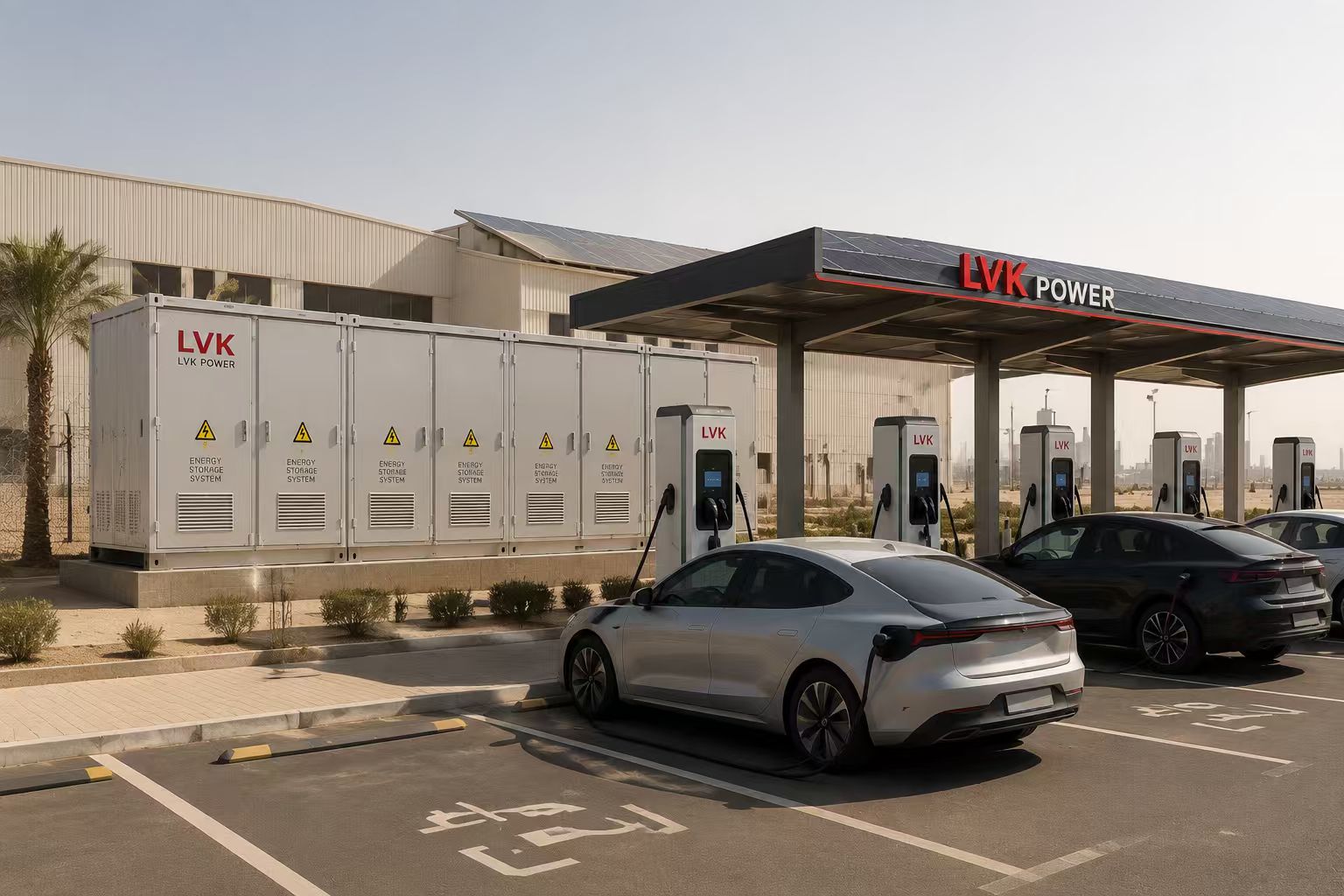
Real Application: EV Charging Station With 261kWh Battery Storage System
An EV service center in the Middle East integrated solar energy and battery storage technology to improve charging performance and energy management.
Project Information
Application: EV charging infrastructure Location: United Arab Emirates System configuration:
Rooftop solar PV system
EV charging equipment
261kWh commercial battery storage cabinet
Intelligent EMS energy management platform
The system operates by optimizing energy flow between solar generation, battery storage, grid power, and charging demand.
During periods of high charging demand, the battery provides additional power support.
During periods of lower demand, available energy is stored for later use.
The project achieved:
Improved charging stability
Better solar energy utilization
Reduced pressure on grid connection
More flexible energy management
This type of application demonstrates how battery storage can support the next generation of EV charging infrastructure.
New Opportunities for EPC Companies and Energy Distributors
The EV charging market is creating new opportunities beyond traditional charging equipment.
Many project developers are now looking for integrated energy solutions that include:
EV chargers
Solar systems
Battery storage
EMS control
Electrical engineering services
For EPC companies and distributors, combining charging infrastructure with battery storage creates additional value and opens new business opportunities.
Companies with battery integration capabilities will be better positioned to support future charging projects.
LVK Power Commercial Energy Storage Solutions
LVK Power develops commercial and industrial battery energy storage systems for EV charging, renewable energy, and industrial applications.
Our solutions include:
100kWh to multi-MWh battery storage systems
Solar + storage solutions
Peak shaving applications
Industrial microgrids
EV charging energy storage systems
With flexible OEM and ODM capabilities, LVK Power supports EPC companies, distributors, and system integrators with customized energy storage solutions.
Building Smarter EV Charging Infrastructure With LVK Power
The future of EV charging in the Middle East will require more than installing charging equipment.
Successful charging networks need reliable energy management solutions that reduce costs, improve efficiency, and support future expansion.
Battery energy storage is becoming a key technology connecting renewable energy, EV charging, and modern power infrastructure.
LVK Power works with global partners to provide reliable commercial BESS solutions for different energy applications.
Looking for a reliable battery energy storage manufacturer for EV charging projects? Contact LVK Power to discuss your next project.