How to Choose Solar Mounting Structures for Commercial & Industrial Rooftops
1.Material: Stop Asking “Which Is Best” and Start Asking “Where Is It Going?”
The steel vs. aluminum debate misses the point. Each has a clear job.
Hot-dip galvanized steel (Q235B, ≥60μm zinc coating)
The workhorse. Strong, affordable, handles high wind (typhoon-ready) and snow. Heavy, so roof load matters. Needs occasional touch-up at cut edges and welds every 2–3 years.
Perfect for: Concrete roofs, large steel-frame factories, inland sites with no salt or chemicals.
Aluminum (anodized, 5–15μm oxide layer)
40% the weight of steel, zero maintenance on corrosion. Weaker, so large spans need extra bracing. Costs more.
Perfect for: Light-gauge metal roofs (load ≤0.3kN/m²), coastal high-salt zones, chemical plants.
Rule of thumb: Steel for strength and budget. Aluminum for weight and corrosion resistance. Don’t overpay for aluminum inland. Don’t use steel near salt spray without extra coating.
2. Load Calculation: The Step Everyone Wants to Skip
You can’t pick a mount until you know what it has to hold. Three numbers matter:
- Wind + snow → 25-year return period. Partial factor: 1.5 each. Typhoon zones need ≥1.2 kN/m² wind load.
- Dead load (mounts + panels + cables) → factor 1.3.
- Live load (maintenance access) → factor 1.5, applied at worst position.
If your factory roof can’t handle the total, you either reinforce the roof or switch to lighter mounts. No shortcuts. A roof collapse isn’t worth the saved engineering fee.
3. Roof Type Tells You How to Attach (Without Leaks)
This is where C&I solar separates pros from amateurs.
Corrugated metal roof (most common)
Clamps only. No drilling, no welding. Clamp spacing ≤1.5m, matched to rib profile.
Never: Screwing through the pan. That’s a guaranteed leak.
Concrete flat roof
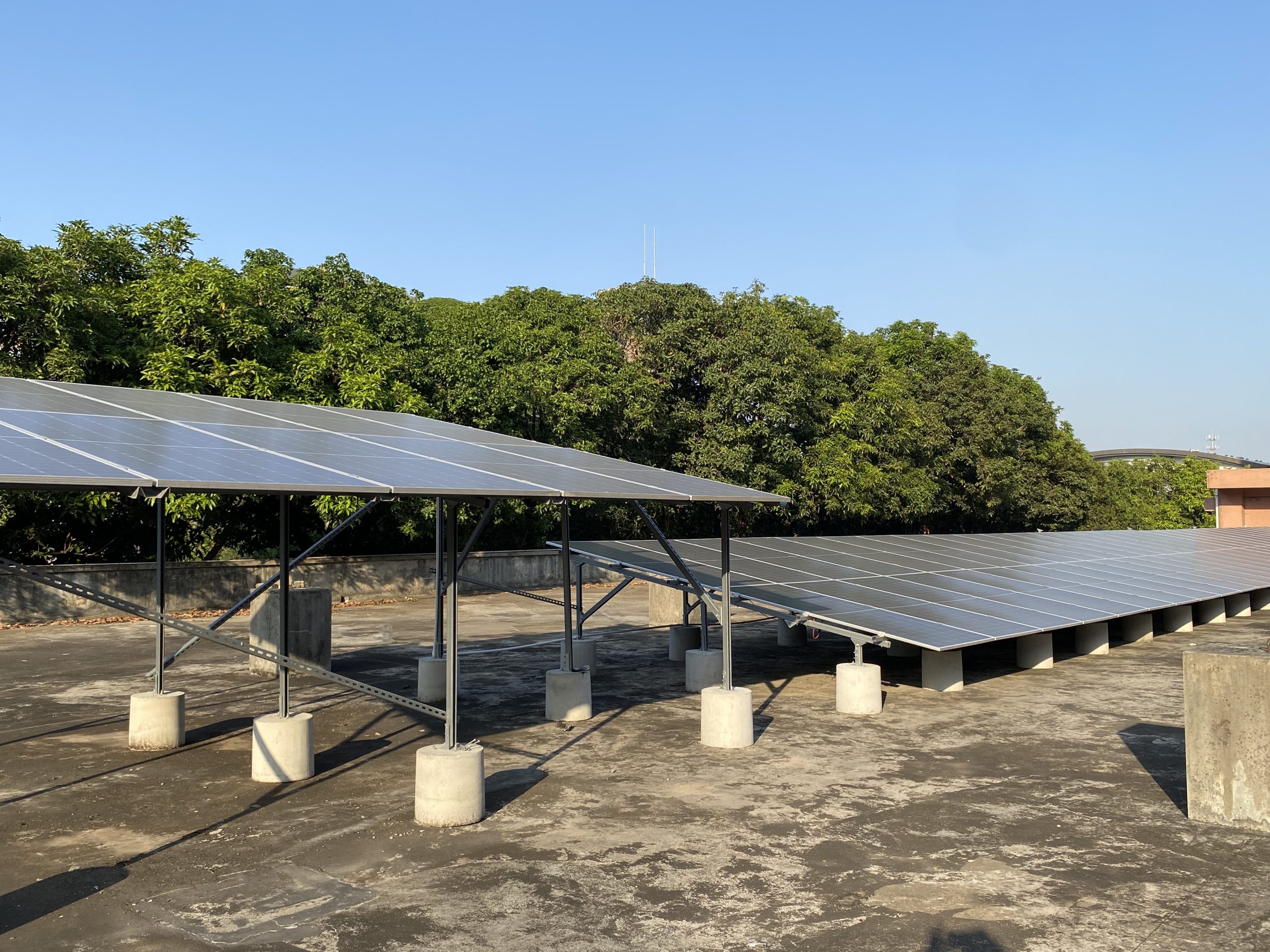
Ballasted mounts (concrete blocks). No penetration, no waterproofing nightmare. Tilt 10–15°.
Alternative: Penetrated mounts with proper seals — only if you trust the waterproofing detail.
Structural steel frame
Weld or bolt directly to beams. Clean and strong. But protect every weld with cold galvanizing or epoxy immediately.
4. Three Small Details That Kill Systems Slowly
Corrosion protection
Steel needs ≥60μm hot-dip galvanizing. In aggressive environments (coastal, chemical), add epoxy primer + polyurethane topcoat. Aluminum is fine with anodizing alone. All bolts: stainless 304 minimum, 316 for coastal.
Tilt angle
South-facing, tilt ≈ local latitude. If your metal roof already slopes, follow it — don’t fight the roof. For flat roofs, minimum 5° for drainage.
Row spacing
No shading between 9am–3pm on winter solstice. Calculate properly, or generation drops fast.
5. What Actually Fails in the Real World
Three patterns I’ve seen repeat:
- Buying on price alone → thin steel, thin zinc (under 45μm), undersized clamps. Rust and loose panels within two years.
- No supplier verification → demand IEC/GB certification, load calculation sheet, corrosion test report, and three project references. If they hesitate, walk.
- Field modifications without engineering → wider spacing, thinner rails. Then a snow load arrives. Don’t.
Final Takeaway
Pick material by environment. Verify loads before you spec. Attach without breaking the roof. Then sweat the small stuff — zinc thickness, tilt, spacing.
Industrial solar is a 25-year bet. The mounting structure is the foundation. Choose like it matters.
Popular Products: