
At minus thirty degrees, my energy storage cabinet has never let me down.
Previously, we shared the stories of a German baker, a Polish farmer, a Spanish olive oil mill owner, and a French winery owner. Today, we are telling the story of a fifth customer. He comes from Sweden, lives in a small town near the Arctic Circle, and his name is Eriksson.
Mr. Eriksson’s problem is different from the previous four. He is not trying to save on electricity bills—although electricity in Sweden is not cheap either. Nor is he worried about power outages—even though they do experience frequent outages there. His core issue is that his energy storage cabinet must operate normally in temperatures as low as minus thirty degrees Celsius.
The electricity shortage problem near the Arctic Circle
Mr. Eriksson’s home is in northern Sweden, just a few dozen kilometers from the Arctic Circle. Winters there are long—from November to March, there are only a few hours of daylight each day. Temperatures often drop below minus twenty degrees Celsius, and at their coldest can reach minus thirty‑five degrees.
His home receives power from the grid, but the grid is not very stable. Heavy winter snow often brings down power lines, and outages can last for several days at a time. In the past, he relied on a diesel generator for emergencies, but the generator was also difficult to start in extreme cold, and it was noisy, fuel‑hungry, and required regular maintenance.
He wanted to install a solar plus storage system: using the long summer daylight hours to generate and store electricity for winter use. However, when he consulted several brands, the reply was always the same: their products had a minimum operating temperature of only minus ten to minus fifteen degrees Celsius—not suitable for his climate.
He was about to give up. Then he found Longvictor New Electrical online.
Why did he choose Longvictor New Electric
When Mr. Eriksson contacted us, his first question was: “Can your energy storage cabinet work at minus thirty degrees Celsius?”
Our engineer told him: the standard version has an operating temperature range of minus ten to plus fifty degrees Celsius. However, we have an upgraded version for extremely cold regions, which integrates an intelligent heating system. When the ambient temperature drops below zero, the heating system automatically activates, maintaining the cell temperature between plus five and fifteen degrees Celsius, ensuring the battery can charge and discharge normally. The extreme operating temperature of this product is minus thirty degrees Celsius.
After hearing this, Mr. Eriksson asked for the detailed technical specifications and studied them for a long time. He also asked several very professional questions: how much electricity does the heating system consume? Will it affect the overall efficiency of the storage cabinet? What is the service life of the heating system?
Our engineer answered each question in detail. The power consumption of the heating system is 500 watts, but it does not run continuously—it works intermittently, consuming an average of about two to three kilowatt‑hours per day. Given the capacity of Mr. Eriksson’s system, this loss is acceptable. The heating element of the system is industrial‑grade, with a design life of over ten years.
Mr. Eriksson thought it over for a few days and finally placed the order. He said: “I’ll take a gamble. If your product can really survive a winter here, I’ll never need that noisy generator again.”
installation and debugging
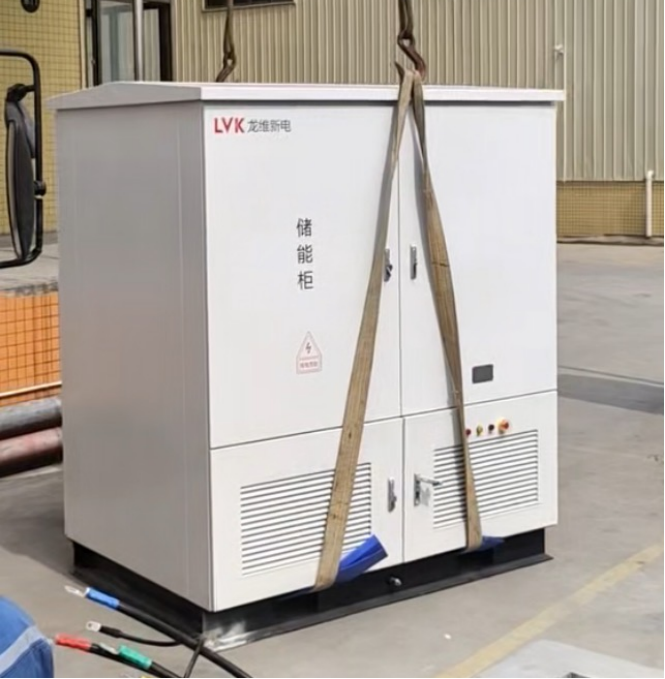
The energy storage cabinet took nearly two months to ship from Guangdong to northern Sweden. The journey involved sea freight, customs clearance, and land transport, finally delivered to Mr. Eriksson’s doorstep by a small truck.
On the day of installation, the local temperature was minus eighteen degrees Celsius. The installer was a local electrician hired by Mr. Eriksson himself, who had never installed an energy storage cabinet before. Our after‑sales engineer, Lao Zhou, provided remote guidance via video call, walking him through every step.
The first challenge: should the cabinet be placed indoors or outdoors? Mr. Eriksson wanted it in an outdoor tool shed, as there was no spare space inside. Lao Zhou assessed the shed’s conditions: it had a roof, no heating, but could block wind and snow. Lao Zhou said it could be placed outdoors, but the shed needed some insulation. Mr. Eriksson lined the interior walls with foam board and added a small‑power heating lamp to ensure the temperature wouldn’t drop too low.
The second challenge: the solar panels were installed on the roof, but snow accumulation in winter would affect power generation. Mr. Eriksson bought a long‑handled snow scraper and cleared the panels after every snowfall. He said this became his regular winter exercise.
The installation took a full day, and finally the system was powered on successfully. Lao Zhou configured the charge‑discharge parameters remotely: in summer, solar power would be stored in the cabinet for nighttime use; in winter, the system would mainly rely on the stored electricity, supplemented by the grid, to ensure uninterrupted power for the home’s heating, lighting, refrigerator, and communication equipment.
The first winter’s challenge
The first winter after the energy storage cabinet was installed turned out to be the coldest winter Mr. Eriksson could remember. For two consecutive weeks, temperatures stayed below minus twenty‑five degrees Celsius, with the lowest day reaching minus thirty‑three degrees.
Every morning, he went out to the tool shed to check on the cabinet. Each time he opened the door, he could hear the faint hum of the heating system at work. The cabinet’s display showed that the cell temperature was maintained at around eight degrees, and the battery level was still above sixty percent.
During those two weeks, the grid went down twice. The first outage lasted four hours, the second seven hours. Each time the power went out, the cabinet automatically switched to off‑grid mode. The lights in his home didn’t flicker, the refrigerator kept running, and the heating system continued to operate. Mr. Eriksson didn’t even realize the power was out at first, because everything in the house was normal. It was only when he glanced at his phone and saw a text message from the grid company notifying him of the outage that he knew the electricity had gone off outside.
He said that at that moment, standing in his warm living room watching the heavy snow fall outside, he felt deeply grateful to that energy storage cabinet in the tool shed.
Summary after one year of use
One year later, we conducted a follow‑up with Mr. Eriksson. He sent us a long summary with several key data points.
First, the energy storage cabinet operated fault‑free throughout the year, never shutting down once due to low temperatures. The heating system worked normally, and the cell temperature remained within the set range at all times.
Second, his annual electricity bill dropped by about sixty percent compared to before the cabinet was installed. In the summer, he barely needed to buy electricity from the grid. In the winter, although solar generation was very low, the cabinet stored electricity from the summer, supplemented by charging during off‑peak grid hours, resulting in a significant overall reduction in electricity costs.
Third, he never used his diesel generator again. He said the generator was now gathering dust in the storage shed, and he planned to sell it.
Fourth, and what made him happiest of all: his wife finally stopped complaining. Previously, every time the power went out, she would complain, “Not another outage!” or “Why can’t your generator start again?” Now, when an outage happens, she doesn’t even know. She said, “It’s as if power outages have disappeared from our lives.”
The sentence that Mr. Erikson said
At the end of the follow‑up, we asked Mr. Eriksson: if he could say one thing to people living in cold regions about energy storage cabinets, what would it be?
He said: “Don’t believe those who say ‘lithium batteries can’t be used in the cold because they’re afraid of low temperatures.’ The key is whether the manufacturer has seriously solved the low‑temperature problem. Longvictor New Electrical has done that.”
He added: “I’ve read every article in your ‘Transparent Factory’ series. I saw your factory in Guangdong, your aging test room, your spare parts warehouse, and your after‑sales engineer Lao Zhou. All of that made me believe that you’re not just trying to sell a product—you genuinely care about whether your customers have a good experience using it.”
In conclusion
Mr. Eriksson’s home now safely endures every winter, with temperatures of minus twenty to minus thirty degrees Celsius. That Longvictor New Electrical energy storage cabinet sits quietly in the tool shed, automatically heating, charging, discharging, and switching modes day after day. It never complains, never fails, never goes on strike. It simply stays there, working silently.
Mr. Eriksson says that sometimes he walks into the tool shed, pats that white metal cabinet, and says: “You are the best thing I ever bought.”
This is Longvictor New Electrical in its thirteenth year. Our energy storage cabinet, in a small town near the Arctic Circle, is guarding the warmth and light of a Swedish family. Whether outside there is a blizzard or polar night, it never lets them down.
If you also live in a cold place, or if your equipment needs to operate in low‑temperature environments, we welcome you to talk with us. We have solutions specifically designed for extreme cold regions, tested under the harshest conditions. Perhaps we can also make you say: “You are the best thing I ever bought.”